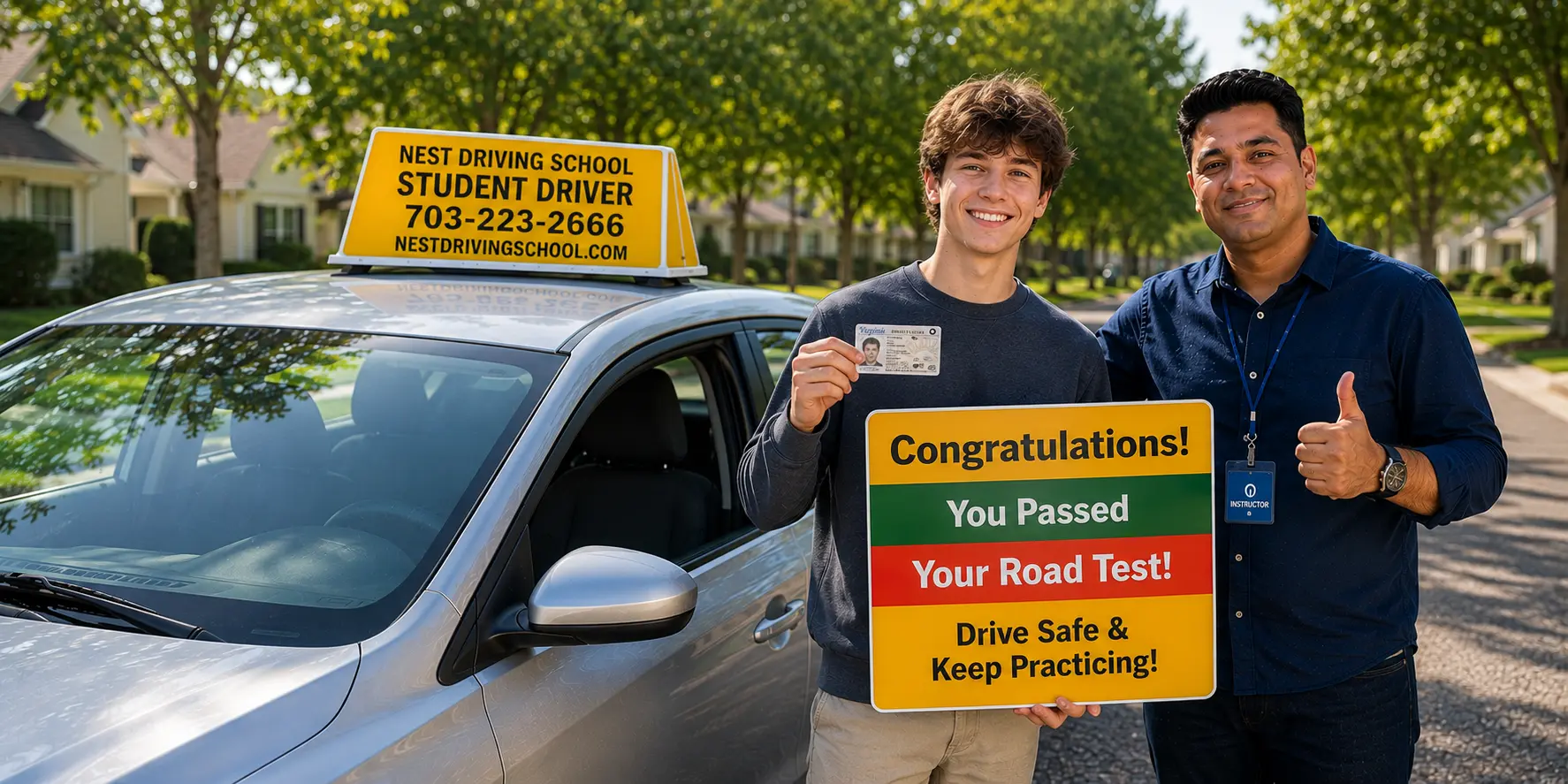
Choosing the right driving school is an important step toward becoming a safe, confident driver. With several options available, finding the right driving school in Falls Church, VA can feel overwhelming. The best choice is not always the school with the lowest price—it’s the one that provides quality instruction, practical experience, flexible scheduling, and a learning environment that helps you become comfortable behind the wheel.
Whether you’re a teenager preparing to drive for the first time, an adult learning to drive, or someone looking to improve existing driving skills, this guide will help you understand what to look for when choosing a driving school in Falls Church, VA.
Why Choosing the Right Driving School Matters
Learning to drive is about much more than simply passing a road test.
A good driving school helps students develop the skills and awareness needed to handle real-world traffic situations. Professional instruction can help new drivers understand road rules, practice vehicle control, develop safe driving habits, and become more comfortable making decisions behind the wheel.
The right instructor can also make a major difference in the learning experience. A patient and experienced instructor can identify areas that need improvement and provide practical guidance during each lesson.
1. Look for Experienced Driving Instructors
One of the first things to consider is the quality of the instructors.
A good instructor should be:
- Patient and professional
- Clear when explaining driving techniques
- Comfortable working with beginners
- Able to provide constructive feedback
- Focused on safety and defensive driving
- Familiar with local road and traffic conditions
Learning to drive can be stressful, especially during the first few lessons. An instructor who creates a calm and supportive environment can help students build confidence gradually.
2. Check the Driving Courses Available
Different students have different driving goals.
Before choosing a school, look at the types of courses it offers. Depending on your needs, you may be looking for:
Teen Driver Training
Teen drivers often need structured instruction and plenty of supervised practice. A good program should focus on vehicle control, traffic awareness, road rules, safe decision-making, and building confidence.
Adult Driving Lessons
Adults who are learning to drive for the first time—or returning to driving after a long break—may prefer personalized lessons based on their current skill level.
Behind-the-Wheel Training
Practical driving experience is one of the most important parts of learning. Look for a program that gives students meaningful time behind the wheel with an instructor.
Road Test Preparation
If you’re preparing for a driving test, targeted practice can help you identify areas that need improvement and become more comfortable with the skills you’ll need during the test.
3. Consider the Location and Service Area
Convenience matters when you’re taking driving lessons.
If you live in Falls Church, VA, choosing a driving school that serves Falls Church and surrounding Northern Virginia communities can make scheduling lessons easier.
Consider whether the school offers:
- Convenient pickup and drop-off options
- Flexible lesson locations
- Training near your regular driving areas
- Easy scheduling
- Service in nearby communities
The easier it is to attend your lessons, the easier it can be to maintain consistent practice.
4. Ask About Behind-the-Wheel Practice
Reading about driving is not the same as actually driving.
A quality driving program should provide opportunities to practice real-world driving skills under professional supervision.
During behind-the-wheel lessons, students may work on areas such as:
- Starting and stopping smoothly
- Steering and vehicle control
- Lane changes
- Turning at intersections
- Parking
- Following traffic signals
- Merging
- Maintaining a safe following distance
- Navigating different traffic conditions
- Defensive driving techniques
The goal should be to help students become increasingly independent and comfortable behind the wheel.
5. Look for a Safety-Focused Approach
A good driving school should put safety at the center of its training.
New drivers need to learn how to recognize potential hazards before they become problems. This includes understanding traffic patterns, watching for pedestrians and cyclists, maintaining appropriate following distances, checking blind spots, and making safe decisions.
Defensive driving habits can help students become more aware of what’s happening around them instead of focusing only on controlling the vehicle.
Good driving isn’t just about knowing how to operate a car. It’s about knowing how to respond to changing situations on the road.
6. Compare Pricing—But Don’t Choose on Price Alone
Cost is naturally an important consideration when selecting a driving school.
However, the cheapest option isn’t necessarily the best value.
When comparing prices, look at what is actually included in the course. Ask questions such as:
- How long is each lesson?
- How much behind-the-wheel training is included?
- Is pickup and drop-off available?
- Are there different course packages?
- Is road test preparation available?
- Are additional lessons available if needed?
- Are there any extra fees?
Instead of comparing only the headline price, compare the overall value and training experience.
7. Check Scheduling Flexibility
Students have different schedules, especially teenagers and working adults.
A driving school with flexible scheduling can make it easier to maintain regular lessons around school, work, and other commitments.
Before enrolling, find out how the scheduling process works and whether lessons can be arranged around your availability.
Consistent practice is often more useful than taking lessons irregularly over a long period.
8. Consider the Learning Environment
Every student learns differently.
Some students become comfortable quickly, while others need additional time and repetition. A good driving school should understand that learning to drive is a process.
Look for instructors who:
- Explain things clearly
- Allow students to ask questions
- Give useful feedback
- Don’t create unnecessary pressure
- Adjust instruction to the student’s skill level
- Encourage safe and confident decision-making
The right learning environment can make a significant difference in how quickly a student becomes comfortable behind the wheel.
9. Read Reviews and Research the School
Before making your decision, spend some time researching the driving school.
Look for reviews that mention:
- Instructor professionalism
- Quality of lessons
- Scheduling experience
- Communication
- Vehicle condition
- Overall student experience
Don’t rely on one review alone. Look for common patterns across multiple reviews.
It’s also useful to visit the school’s website and understand its courses, service areas, policies, and contact information before enrolling.
10. Choose a School That Fits Your Driving Goals
The “best” driving school isn’t necessarily the same for everyone.
For example:
A teenager may need a structured driver education program.
A new adult driver may prefer one-on-one lessons.
An experienced driver may only need a few refresher sessions.
A student preparing for a road test may benefit from focused practice and test preparation.
Think about your specific goal first, then choose a driving school that offers the training that matches it.